
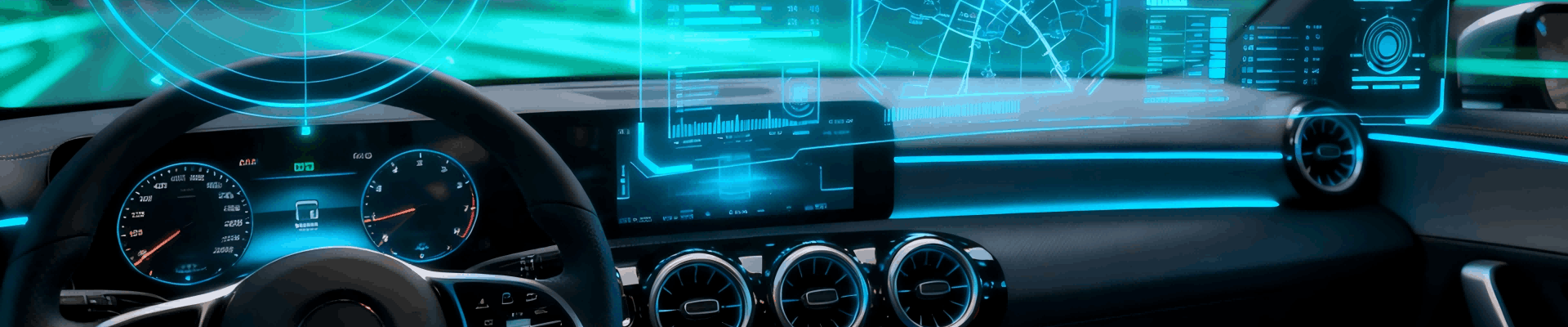
A vehicle specific car DVD can be suitable for luxury or modern vehicles, but only when it is engineered to match the vehicle platform in structure, signal logic, and function retention. In this segment, appearance alone is not enough. A premium dashboard demands accurate panel fit, stable software, smooth screen response, and reliable support for original controls. This matters because vehicles are staying in service longer and owners are increasingly upgrading existing systems instead of replacing the whole vehicle. S&P Global Mobility reported that the average age of vehicles in the United States reached 12.8 years in 2025, which continues to support the replacement infotainment market.
For luxury and modern vehicles, the standard for compatibility is higher than it is in older entry-level models. The replacement unit must preserve the original interior look, work with advanced vehicle electronics, and support connected infotainment features that drivers now expect. Google reported in 2025 that Android Auto is supported in nearly all new cars sold, with almost 250 million compatible vehicles already on the road. That level of adoption means a modern vehicle specific head unit is expected to handle phone integration, navigation, media access, and control logic smoothly, not simply display a larger screen.
The biggest reason vehicle specific products can work well in this segment is precision fitment. A vehicle specific car DVD is developed around a defined dashboard layout, mounting structure, wiring harness, and signal path. This allows the unit to follow the trim lines of the original interior more closely and reduces the need for visible installation compromises. In luxury or modern vehicles, that fitment quality matters because poor fascia alignment, unstable touch response, or slow signal switching will be noticed immediately. A correct design can also support original functions such as steering wheel controls, reverse camera display, parking signals, and parts of the factory information interface.
This is where manufacturer vs trader becomes a practical issue. A trader may provide a long application list, but a manufacturer can control fascia tooling, PCB layout, decoder matching, software tuning, and repeat-batch consistency in one engineering system. STC’s company materials describe an operation integrating research, production, and sales of automotive smart multimedia systems, supported by modern production facilities and certifications including ISO9001, IATF16949, CE, FCC, RoHS, WCA, GSV, and BSCI. Its catalog also shows both universal and vehicle-specific product lines, which supports broader fitment development and more stable supply planning.
For OEM / ODM process work, suitability for luxury or modern vehicles should be evaluated early. The factory should begin with vehicle data confirmation, dashboard measurement, connector review, CAN communication mapping, and function-retention planning. Then it should move through sample validation, pilot production, aging test, and final inspection. This process matters because vehicles in this segment often have tighter dashboard tolerances and more integrated electrical systems. In bulk supply considerations, stable repeatability is more important than one visually attractive sample.
A practical project sourcing checklist can help clarify whether the product is truly suitable:
| Checkpoint | Why it matters for luxury or modern vehicles |
|---|---|
| Dashboard match | Clean fascia fit and factory-style appearance |
| Signal compatibility | Stable support for CAN bus and retained functions |
| Display quality | Clear image, fast touch response, refined interface |
| Multimedia | Smooth Bluetooth, GPS, camera, and phone integration |
| QC process | Consistent performance across repeat production |
| Compliance | Export-ready documents and controlled materials |
A strong manufacturing process overview also matters more in this segment. A reliable factory should control incoming material inspection, fascia molding, display assembly, software flashing, signal verification, connector testing, and burn-in validation before shipment. These quality control checkpoints directly affect whether the unit feels suitable in a premium cabin. Weak connectors, slow firmware, inconsistent panels, or unstable Bluetooth pairing will quickly reduce product value in luxury-oriented applications.
The material standards used are equally important. Housing parts must keep dimensional stability under heat, connectors need strong retention under vibration, and internal electronic components should tolerate long-term automotive voltage fluctuation. In luxury or modern vehicles, buyers often expect better tactile quality and cleaner long-term performance, so material control is part of suitability, not just durability.
Export market compliance should also be treated as part of the design process. The European Commission states that RoHS restricts hazardous substances in electrical and electronic equipment. These requirements affect component sourcing, technical files, labeling, and shipment readiness throughout development and production. For premium vehicle applications, disciplined compliance usually goes together with disciplined engineering control, which is one reason better-managed factories tend to perform better in this segment.
So, are vehicle specific car DVDs suitable for luxury or modern vehicles? Yes, they can be, but only when the product is backed by exact vehicle matching, stable software integration, controlled manufacturing, and export-ready standards. In this category, suitability is not decided by a large screen or a premium-looking panel alone. It is decided by whether the supplier can turn vehicle-specific engineering into a product that feels natural inside a modern cabin and remains reliable across real-world use.