
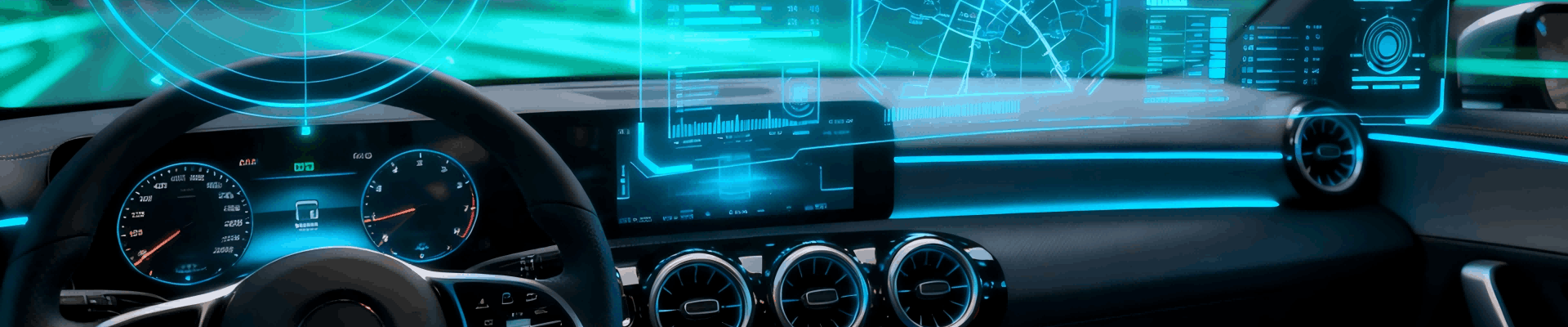
A vehicle specific car DVD can be compatible with Apple CarPlay and Android Auto, but compatibility depends on more than the product name. A unit developed for a defined car model has a stronger chance of delivering stable phone integration because its dashboard structure, wiring harness, signal logic, and software interface are matched to a specific vehicle platform. This matters in today’s upgrade market because vehicles remain in service longer and more owners want modern infotainment without changing the whole vehicle. S&P Global Mobility reported that the average age of vehicles in the United States reached 12.8 years in 2025, which continues to support demand for replacement multimedia and upgrade solutions.
From a user function perspective, both systems have become core expectations. Apple describes CarPlay as a smarter, safer way to use iPhone in the car for directions, calls, messages, and music on the built-in display. Google reported in 2025 that Android Auto is supported in nearly all new cars sold and is compatible with almost 250 million vehicles on the road. That means a competitive vehicle specific head unit is no longer judged only by screen size or panel fit. It is also judged by how smoothly it handles connected navigation, communication, and media functions.
Still, not every vehicle specific car DVD supports these systems at the same level. Some units offer wired connection only, while others support wireless pairing. Some can display phone apps but struggle with unstable Bluetooth handoff, delayed USB recognition, or weak microphone performance. This is where manufacturer vs trader becomes important. A trader may list CarPlay and Android Auto as standard features, but a manufacturer can control PCB layout, display integration, USB signal path, wireless module stability, firmware tuning, and batch consistency through one internal process. STC’s materials show an operation integrating research, production, and sales of automotive smart multimedia systems, supported by modern production facilities and certifications including ISO9001, IATF16949, CE, FCC, RoHS, WCA, GSV, and BSCI. Its catalog also covers both universal and vehicle-specific product lines, which supports broader development and more stable project execution.
For a stable OEM / ODM process, phone integration should be evaluated from the beginning of development. The factory should confirm the target vehicle model, dashboard structure, harness type, processor platform, USB configuration, Bluetooth module, microphone design, and software interface requirements. After that, the project should move through sample validation, pilot production, aging test, and final inspection. This is especially important for bulk supply considerations, because one sample that runs CarPlay or Android Auto correctly is not enough. Repeat orders need the same connection speed, screen response, audio quality, and signal stability across every batch.
A practical project sourcing checklist can be organized like this:
| Checkpoint | What should be confirmed |
|---|---|
| Vehicle match | Dashboard shape, connector type, year range |
| Phone integration | Wired or wireless CarPlay and Android Auto |
| Hardware platform | Processor, memory, USB stability, Bluetooth module |
| Audio and control | Microphone quality, touch response, steering control mapping |
| QC process | Aging test, signal test, final inspection |
| Export readiness | CE, FCC, RoHS files, labeling, packaging |
A clear manufacturing process overview also matters. A reliable factory should control incoming material inspection, mainboard assembly, display fitting, software flashing, signal verification, button learning, and full-function final testing. These quality control checkpoints directly affect real-world phone compatibility. If USB transmission is unstable, if connectors have poor retention, or if firmware validation is incomplete, then CarPlay and Android Auto performance can become inconsistent in the field. The material standards used also influence results. Connectors must resist vibration, housings must keep dimensional stability under heat, and internal components should tolerate automotive voltage fluctuation during long-term use.
Export market compliance should be reviewed early as well. The FCC states that RF devices must be properly authorized before they are marketed or imported into the United States. This matters for multimedia units that include wireless communication functions. At the same time, product development for European markets should consider RoHS requirements as part of component and materials planning. These rules affect technical files, labeling, and shipment readiness, and they should be built into the project instead of being treated as final paperwork.
So, are vehicle specific car DVDs compatible with Apple CarPlay and Android Auto? In many cases, yes, but real compatibility depends on engineering depth, software stability, controlled manufacturing, and export-ready validation. In this category, strong phone integration is not just a feature claim on a product page. It is the result of a factory that can turn vehicle-specific design into repeatable multimedia performance.