
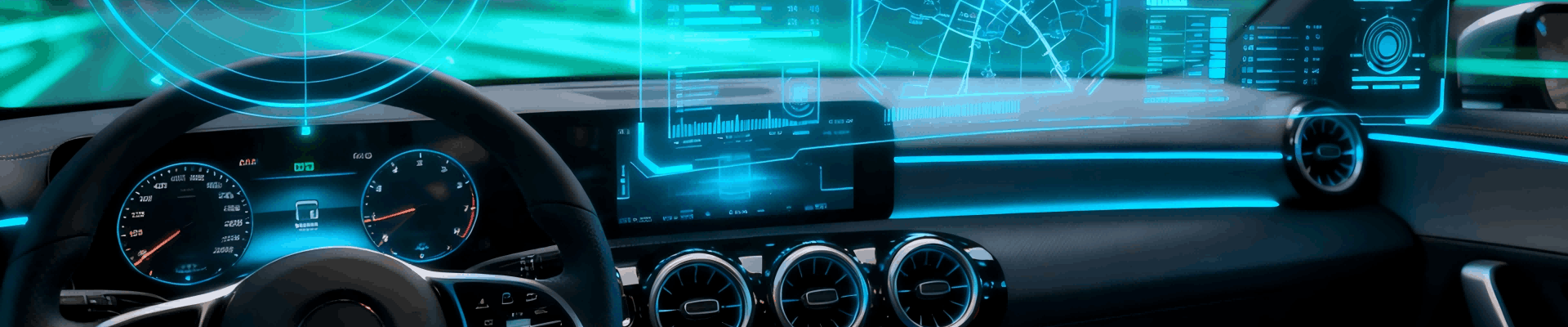
A vehicle specific car DVD improves driving experience by combining factory-style fitment with modern infotainment, better control logic, and cleaner integration with the original vehicle system. Unlike a universal car stereo, it is developed around a defined car model, dashboard structure, and wiring architecture, so the result is usually more natural in daily use. This matters because vehicles are staying on the road longer. S&P Global Mobility reported that the average age of vehicles in the United States reached 12.8 years in 2025, which continues to support demand for replacement infotainment and upgrade solutions rather than full vehicle replacement.
The first improvement is dashboard integration. A vehicle specific head unit is typically shaped to match the original panel, mounting points, and trim lines, which creates a cleaner installation result and reduces the need for visible adaptation parts. That improves not only appearance but also usability, because the screen position, viewing angle, and control layout are more aligned with the original vehicle interior. In practical terms, this gives drivers faster visual access to maps, media, and camera images while keeping the cabin more organized. STC’s catalog shows dedicated multimedia product lines alongside universal models, which supports a more structured fitment approach for vehicle-based programs.
The second improvement is function continuity. A well-developed vehicle specific car DVD can often retain steering wheel controls, reverse camera display, parking signal input, radio functions, and parts of the factory information interface. That helps the driver keep familiar operating habits while upgrading to a newer multimedia platform. Connected infotainment is now a baseline expectation in the market. Google stated in 2024 that Android Auto was already in over 200 million cars on the road, and reporting in 2025 indicated that figure had risen above 250 million, showing how strongly drivers now expect phone-based navigation, calls, music, and app access from in-car displays.
The third improvement comes from supplier capability. This is where manufacturer vs trader becomes important. A trader may supply a model list and a harness pack, but a manufacturer can control fascia tooling, PCB design, CAN protocol matching, software adaptation, thermal structure, and repeat-batch consistency under one system. STC presents itself as an enterprise integrating research, production, and sales of automotive smart multimedia systems, with modern facilities and certifications including ISO9001, IATF16949, CE, FCC, RoHS, WCA, GSV, and BSCI. That factory structure matters because driving experience is shaped not only by features on paper, but by how consistently the product is engineered and built.
For OEM / ODM process management, driving experience should be planned before production begins. A proper process includes vehicle data confirmation, dashboard measurement, connector review, function mapping, sample validation, pilot production, aging test, and final inspection. This is especially important for bulk supply considerations, because repeat orders need the same touch response, Bluetooth stability, GPS performance, and button behavior across all units. When these steps are controlled well, the end user experiences smoother startup, more reliable phone connection, better audio performance, and more intuitive interaction in daily driving.
A useful project sourcing checklist can be summarized like this:
| Checkpoint | Why it matters for driving experience |
|---|---|
| Vehicle match | Better screen position and cleaner dashboard fit |
| Function retention | Familiar controls and easier daily operation |
| Display quality | Clearer maps, camera view, and media interface |
| Signal stability | Better Bluetooth, GPS, and reverse response |
| QC process | Fewer failures and more consistent user experience |
| Customization | Better UI language, logo, and package alignment |
The manufacturing process overview also affects driving comfort more than many buyers expect. A vehicle specific unit should pass incoming material inspection, display verification, connector testing, software flashing, signal testing, vibration checks, and burn-in validation before shipment. These quality control checkpoints help prevent issues such as delayed touch response, weak Bluetooth pairing, unstable reverse-camera switching, or inaccurate button learning. The material standards used are equally important. Housings need dimensional stability under heat, connectors must resist vibration, and internal components should tolerate voltage fluctuation during long-term vehicle operation.
Export market compliance also supports better product performance. The FCC states that radio frequency devices must be properly authorized before they are marketed or imported into the United States, and the European Commission states that RoHS restricts hazardous substances in electrical and electronic equipment. These rules influence component selection, technical files, labeling, and shipment readiness from the start of development. In automotive electronics, disciplined compliance usually goes hand in hand with disciplined engineering, which helps produce more stable in-vehicle performance.
So, how does a vehicle specific car DVD improve driving experience? It improves it by fitting the vehicle more naturally, preserving useful original controls, adding modern multimedia functions, and reducing the friction between old vehicle systems and new digital expectations. In this category, better driving experience is not created by a larger screen alone. It comes from accurate vehicle matching, controlled manufacturing, stable quality, and a supplier that understands how engineering decisions shape everyday use.